WTF, Bill Maher

I love you, but every few months you go on a rant about fat people. You find overweight people infuriating for some reason that I just can’t understand. As a liberal-minded celebrity with incisive intelligence and a razor-sharp wit, why this blind spot?

As someone who is currently thin but formerly quite fat, I can tell you that I was just as interesting, just as valuable then as I am now. I have struggled my whole adult life to lose weight and keep it off, and I can tell you that it is extremely difficult to do. Five previous times, I have dieted down to my goal weight. Five times the pounds came back, unbidden. This time I have kept the weight off for three years through Herculean effort.

“While I have you on the line, let me share some facts about overweight and weight loss that you might not know. My hope is that, rather than blowing a gasket, you will just chill the next time you encounter someone who is not the size and shape you would prefer.”

  1. People do not “choose” to be fat or thin. For an overweight person, maintaining a lower weight requires a complicated set of skills and a great deal of work (Karasu & Karasu, 2010).
  2. Overweight people are psychologically indistinguishable from normal weight people. There is no overarching psychological reason that people are heavy (Kolata, 2007).
  3. Dieting and regaining weight is not an indication of a character flaw. Instead, biology, psychology, and temptation are all factors in our weight management (Mann, 2015).
  4. Weight regain is the body’s response to a biological mechanism to prevent starvation. The thinner body goes on a “single-minded pursuit for more fuel” (Mann, 2015).
  5. Being overweight is not a personal choice. Overweight is due to a complex interaction between genetics, the brain, metabolism, and the environment (Karasu & Karasu, 2010).
  6. There is a huge financial stake in keeping the blame on people who are overweight. Researchers, drug companies, and the diet industry depend on the myth that weight is completely under the individual’s control (Kolata, 2007; Tara, 2017)
  7. Overweight may be an adaptation that preserves fat and seeks out calories; it’s part of our genetic code (Karasu & Karasu, 2010).
  8. Some extra weight is actually protective. It is not an indicator of poor health (Bacon & Aphramor, 2014; Mann, 2015).
  9. The complexities of losing and maintaining weight are not currently understood by researchers and scientists. Being overweight is not simply an imbalance of input and output as we have been taught to believe. Instead, the weight loss literature presents various, sometimes competing schools of thought (Karasu & Karasu, 2010).
  10. The body has many redundant pathways to prevent weight loss and to prompt regain. These mechanisms have been essential to our survival as a species but, in a world of plenty, can be problematic (Lustig, 2014).

So please stop it! I want to love you but you make it very hard when you dis overweight people. Someone who carries a few more pounds than you is no less worthy than your skinny ass is.

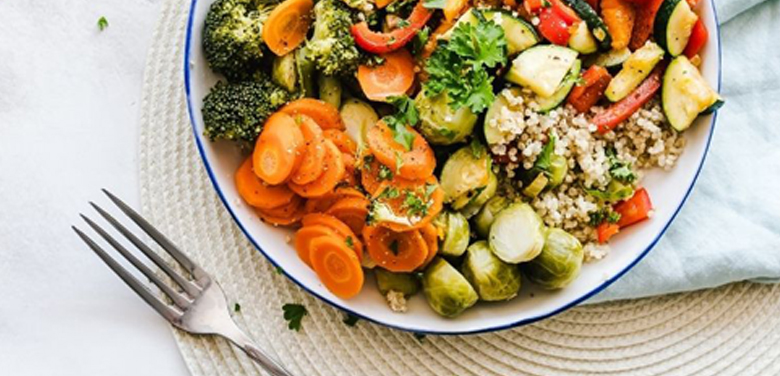
“Eat Lightly” Butternut Squash Soup

4 cups chicken broth (or vegetable broth)

12 oz. butternut squash, peeled and cut up

1 onion, peeled and cut in big chunks

1 large (or two small) apples, cut up

1/4 teaspoon salt, 1/8 teaspoon pepper, 1/8 teaspoon nutmeg

Put all ingredients in a large pan and bring up to a boil for 10 minutes. Turn the burner down to a simmer until the squash is squashable. Turn off heat. Blend until smooth using an immersion blender, regular blender, hand mixer, or how ever you make lumpy foods smooth. Taste and adjust the seasoning.

This delicious soup is zero WW points as well as a Noom low density food. We have seen similar recipes on the WW website but have adapted this one to our own tastes. Enjoy with gay abandon.

What Do We Mean by “Eat Lightly?”

First of all, I don’t like to be hungry—at least not for long. Whereas having a healthy appetite is fun when you are waiting for your table at a fabulous restaurant, you wouldn’t want to wait an hour with your tummy rumbling! That’s too much hunger, and that’s something to avoid while you’re maintaining. Also, I’m also guessing that some of you have ignored your biological signals for so long, you don’t really know what healthy hunger feels like. Learning to hear the signals of hunger, thirst, and fullness are foundational and we’ll discuss them in a later blog. Today, though, I want to turn our attention to what it means to eat lightly.

Thankfully, there are many foods in the world that can (a) address that hunger, and (b) fit easily into a maintenance lifestyle. The various diet plans have dealt with eating lightly in different ways. For example, Noom has identified what they call “low density foods:” food that are high in water content and, therefore, naturally lower in calories. Fruits and vegetables fit into this category but so do a surprising number of other foods such as oatmeal and soups. Bon appetit! WW provides a long list of zero-point value foods which can be eaten as needed. Of course, at the top of the list is fruits and vegetables. On the WW plan that I use the following additional foods are not included in the daily points total: legumes, beans, peas and all vegetables with the exception of avocados and potatoes; eggs; chicken and turkey breast; fish; and non-fat Greek yogurt. That is a lot of snack options, folks!

“Most people are comfortable with having fruit as a snack but are less conversant when it comes to the vegetable kingdom”

Yes, but how can I make these foods into snacks and meals, you say. Some of them can be at your fingertips with minimal effort such as a hardboiled egg with a dusting of salt, a bowl of your homemade vegetable soup (we’ll share recipes soon), yogurt with fresh apples sliced into it, or tuna. Fruit is often a nice choice because it satisfies the desire for sweetness. An egg or yogurt can be great when you crave protein. We posted a recipe for bean salad which is a great hunger-buster that can be eaten anytime, especially when carbs call. It is delicious, and is loaded with protein and fiber.

Most people are comfortable with having fruit as a snack but are less conversant when it comes to the vegetable kingdom. One of my favorite tricks is roasting vegetables—all kinds of vegetables. Whether my quarry is a tender vegetable such as zucchini or asparagus, or super-crunchy ones like rainbow carrots or winter squash, my method is roughly the same. I preheat my oven to 375 degrees, spray a shallow pan (like a cookie sheet) with a little non-stick cooking spray, cut the veggies into mouth-sized chunks, place on the pan, sprinkle your veggies with a bit of salt if desired, and position the pan in a low place in the oven. Tender veggies are done in 10 to 12 minutes. Hard vegetables take closer to 45 minutes and you’ll want to toss them around about halfway through the roasting process. Use a fork to determine doneness.

Those are my ideas for light foods that are also satisfying. If you have “go to” foods that you can have any time you feel hungry, you’ll be less likely to eat something that’s not-so-light. However, if you do, no big deal. No one ever gained weight from one snack or one meal. The effects are cumulative. So, enjoy some new “light” foods. Let us know what you liked and what you didn’t.

Who is the Biggest Loser?

Our slogan is “Stop Losing and Win.” This is my story about my “loser” past and how I was transformed into a “winner.”

Let me tell you a story. I am a real “loser” when it comes to dieting. Just in the past 12 years, I have weighed every weight from 136 to 205. I have dieted down and reached my goal weight six times in my adult life, only to swiftly gain back all of the weight and more. This last time was different—this time I have been much more successful in keeping the weight off for several tangible reasons:

  1. I kept many of the dieting behaviors during maintenance, focusing on fruits and vegetables for desserts and snacks, and eating lightly (fruits and vegetables have a low calorie density).
  2. I found forms of exercise that I really like which keeps me active (exercise is essential for maintenance, and if you love it, you will do it).
  3. I got on the scale every day and recorded my weight once a week (I often refer to this list, a record of my weights since 2017).
  4. I sought out and tried new foods to make sure that eating was always a delight (don’t let boredom bring you down).
  5. I allowed myself occasional treats such as a dessert or dinner out (no eating plan is undone by one meal or one day off plan).
  6. I learned to start listening to my body’s signals about hunger and fullness (indicators that I had ignored since I was a child).

We will explore all of these strategies in the coming months, covering each topic in depth. In the meantime, choose one or two to try. See how they work for you. These strategies and more will help you, whether you’re looking to lose weight or maintain it.

We’d love to hear from you. What strategy from this list did you try and how did it work? What other strategies do you use to stay on track?

That “Just Right” Weight

At my doctor’s office, I get a print out that tells me that my now much leaner body is still at least 20 pounds too heavy.  I’ve been that thin, and believe me, it is too scrawny.  And, if I should drop that kind of weight again as a senior citizen, how would that impact my lean tissues and bones?  Happily, my doctor does not look at me and ask when those last 20 will come off. 

So, why do I call my current weight range “just right”?   Here are a few insights into my decision making that may be helpful:

  1. I matured to be this weight as I developed, and I was able to accept myself as I was at that time, after a childhood of being teased for being overweight.
  2. I have weighed this much as an adult before for an extended period, and was able to maintain it.  I would lose weight, but quickly return to it.
  3. My body adjusted up from a slightly lighter weight as I stopped losing weight in 2018 and moved to maintain.  It is fairly easy to just wake up at this weight, plus or minus a pound or two, each morning.

So, what is this weight for me?  It has history of a feeling of being comfortable in my skin.  It is not unrealistic because it was where I landed before body shame and eating disorders began in my teens, and my body seems to be happy and healthy right here now.

People who write about the difficulties of losing weight and maintaining that loss use a term called a “set weight”. It is like a default point that one’s brain can defend. I believe this is where I have arrived.  

As you think back through your life up to this point, do you also have a weight where you were feeling, in retrospect, just right? 

Do you have a weight that you tend to return to after you try the latest new diet?

Three Easy Steps? Get Real

The internet is full of quick fixes and glib promises. In fact, when I told my friend that I wanted to write this blog, she warned me not to. “People don’t want to hear about methods that take months and years to accomplish”, she said, “they want quick, easy, painless.” Learning to reach a healthy weight and stay there is a process. It’s not impossible but it certainly isn’t easy, either. So, what does it take? I have three steps. They are rewarding, but they all require a bit of training.

  1. Develop a new relationship with food. I love food—everything about food. I think about it a lot and I’ve turned that love into a strength for maintenance. I nurture myself with delicious and nutritious meals and snacks. I provide myself and my loved ones with a wide variety of new and familiar foods, knowing that the mind and body love novelty as much as they love tradition. Over the years, my choices have changed and with them, my tastes. Most meals are based on produce now, and I eat foods that have a low-calorie density with gay abandon. As I did when I weighed 50 pounds more, I still think about dinner during breakfast and the next days meals during dinner, but I know my choices will be mouth-wateringly delicious. I don’t fix and eat boring diet foods but I certainly watch the calories. As you plan your meals, consider variety, quality, and flavor. No one wants to eat boring diet food.
  2. Learn to love movement. Boy, have I learned to love exercise! You probably know that while exercise is not very helpful for weight loss, it is essential to weight maintenance. It speeds metabolism, builds muscle, aids sleep, and is the best antidepressant on the planet. Not only that, but exercising regularly makes you want to exercise regularly. My partner and I enjoy several strength-building classes and get out for long walks four or five times each week. Our two-mile walks have morphed into four-mile walks, and we never run out of food for conversation. We plan our walks with a destination in mind whether it be lunch, or coffee, or shopping, or the zoo, or the beach, or checking out what houses in our neighborhood are for sale. As you think about how to add movement to your daily life, consider what you really love. Is it dance, swimming, hiking? Make those the centerpiece of your plans.
  3. Live your life flexibly. As I have written elsewhere, Weight Management is a Game of Strategy, Not a Religion. I do not hold my appetite back like it’s a mad dog, ready to attack any “bad” food that it sees. Instead, I simply have the occasional cookie, I take a portion of something rich and delicious. I live my life without guilt or fear. Mostly, I’m eating well and moving often. Mostly, I’m happy with eating on the light side and exercising on the heavy side. But not always. So, I cut myself some slack, making sure I do so without guilt or remorse. As I mentioned in Ditch the Deprivation, the harder you hold yourself back, the more forcefully, you will land in the middle of a big, fattening dessert!

So, these are three of the things I do to succeed in maintaining my weight. They are probably not the only things I do, but they seemed important today. The take-away is this: Relax into a process of reaching and maintaining your healthy weight. No one ever effected permanent change through torture, and eating and moving are, essentially, life. These three relatively easy steps can fit into any schedule, any family situation, and any personality type. Are they quick and easy? No. Are they humanly possible? Indeed! Need more specifics to make these changes? No problem! We’ll be breaking these three steps down in much greater detail in upcoming posts. You can do this!

Weight Management is a Game of Strategy, Not a Religion

Having tried and failed many times to manage our weight, we intimately understand how failure feels. Weight management becomes a moral goal, and any lapse in adherence to the behavioral standard we set for ourselves becomes a moral failing—a blot on our character. Let’s unpack this idea.

Karen and I lost a substantial amount of weight and have been maintaining for several years. We have come to see weight management as a game of strategy, not a moral imperative. So, weight management shifts from an all-or-nothing, zero-sum game to a game of strategy. What lifestyle components can I manipulate to get the effect I want? How do I think about myself when the numbers go up on the scale (and eventually, they will)? How do I (re)define success so that the ups and downs of weight management can be defined as success?

Maintenance, by definition, is keeping the boat steady, and losing weight is rowing the boat in a certain direction. Either way, you want to be in the boat. What do most people do when the scale goes up? They jump overboard. During the COVID-19 pandemic, we both lost our access to the gym. We both had too many hours in front of televisions, books, and screens and near our kitchens. Hence: we both put on

So, weight management shifts from an all-or-nothing, zero-sum game to a game of strategy.

some weight. Our strategies? We gradually figured out how to get more exercise (essential for maintenance) and re-adjust our eating (less snacking). This didn’t happen overnight. It took months to figure out how to steady the boat. We strategized with each other and exercised self-compassion. We patiently (and sometimes impatiently) waited for our strategies to work. When they didn’t work, we moved on to a different tactic. We tried various new things—I went on the Noom plan, doubled my exercise, and developed a water habit. Karen picked up new exercise classes online and started to walk more, added a salad as a 3:00 snack to dull the dinnertime hunger, and learned to be intentionally kinder to herself.

So much of success has to do with mindset! If you think of weight management as a game, you will take a tactical approach. If you think of it as a religion, you will self-flagellate when your weight re-adjusts. You’ll be tempted to throw yourself overboard. We like our strategic approach better, don’t you?

Ditch the Deprivation

Why is it that 80 percent of the time people gain back all of the weight they dieted off? Just like a rubber band, when you are pulled very strongly in one direction, you will explode in the opposite direction. Dieting requires a lot of restriction. It’s a constant pressure keg. One slip-up or deviation from the rules will trigger that explosive response of uncontrolled and uncontrollable eating.

So, what is the solution? What if we didn’t pull so hard toward restriction? What if we eased up on ourselves, giving permission to enjoy the universe of good things to eat, not just diet foods? Without a strong pull in the direction of restricting, there is no need to worry about the rebound and the resulting loss of control. But how?

“Without a strong pull in the direction of restricting, there is no need to worry about the rebound and the resulting loss of control.”

Before I answer, here are a few more questions. Do you know how to eat outside of your diet plan? How to choose foods you really want and enjoy them without worry or guilt? Unfortunately, dieting does not reinforce these skills, nor does it provide permission to simply eat. However, when no food is off limits, the rich and powerful foods you’ve been avoiding kind of lose their allure. What if all foods were, literally and figuratively, on the table?

Dieters are good scientists and deep-down they know that one meal or one dessert will have zero impact on their weight. Adhering to good nutritional habits most of the time and taking a foray into the world of fun foods from time-to-time will relax that rubber band reaction to a world of formerly “forbidden foods.” How about this: no food is off limits when good nutrition is the ultimate goal. Loosen up. I guarantee that you’ll be perfectly safe.

#weightlossmaintenace, #weightmaintenace, #stopdieting

Don’t Forget the Veggies

My (Karen’s) immediate family lives in Central New York, and the weather is never predictable.  The last day of May can be hot and humid, or chilly and damp…or anything in between. Memorial Day 2021, it was perfect. Our daughter and her family came for a cookout.  They brought chairs, My husband John lit the grill, but I found I didn’t have any tables to hold additional food choices.  Hamburgers and hotdogs came quickly from the grill into rolls on plates on people’s laps.  Condiments got passed around and all seemed fine. I enjoyed a hamburger and a hotdog, then a bit of dessert.  Beautiful day, no mosquitoes, and the delights of togetherness. 

Company went home, John and I picked up and sat down for a bit of TV.  Just a few hours after our picnic, I said “I’m starving”.  John said “Me too”.  I made us a salad with lots of fresh veggies topped with our ubiquitous bean salad (recipe included as a blog), and we were fine for the evening.

So, what went wrong between a cookout and our sensation of serious hunger? 

Over the years my husband and I have incorporated more legumes and vegetables into our diet.  This is really helpful for keeping us from feeling hungry.   Reading Dr. Michael Greger’s How Not to Diet, I learned about something called the ileal brake.  The end of the small intestine, just before it empties into the large intestine, is called the ileum.

“When undigested calories are detected that far down our intestines, our bodies put the brakes on eating more by curbing our appetites.”

How to Not Diet, Michael Greger, page 125

We have been counting on a sensation of satisfaction that comes from making sure there is plenty of fiber for our guts to deal with right up to the ileum.  The white bread carbs and protein we had taken in had slipped right by the ileal brake, but once we indulged in our usual veggies and legumes, we were satiated. This tactic has been working really well for years, but we had never put it to a test like our Memorial Day picnic.  The next cookout, weather permitting, will include an outdoor table so that vegetables and bean salad will be right there and John will be less likely to consume 4 hotdogs, some hamburgers, and still find himself starving.

Six Superpowers for Weight Management

You can maintain, and the longer you do, the easier it gets. Today we were out for breakfast and the waitress brought us an enormous one! A huge omelet, a ridiculous pile of home fries, and a big ol’ bagel with cream cheese. There was a time, about four years ago, when I could have done some real damage to a meal like that. Not anymore! I enjoyed every bite of about one-third of my omelet and carefully spread some cream cheese on half a bagel and ate it. I wasn’t dieting. I wasn’t restricting. I was eating exactly what I wanted.

How does this happen? Three years ago, I would have had to use my superpowers to manage a meal like that. My superpowers are a list of strategies that I use as needed to maintain my 50-pound weight loss. For example, I may have brought the menu up online in advance and decided exactly what to order.  In fact, three years ago I would have looked at that menu and opted not to go to a Jewish deli for breakfast—too much temptation. Now, I can order what I want and eat a sensible amount, something I had never been able to do before.

“My superpowers are a list of strategies that I use as needed to maintain my 50-pound weight loss”

Maintenance is hard. Don’t ever let anyone tell you it is not! But it gets easier. Your body and mind acclimate to less food and more nutritious food. You begin to crave fruits and vegetables and find it easier and easier to pass up junk and sweets. However, this takes years, not weeks or months. In the meantime, you may need to call on your superpowers to maintain your hard-earned weight loss.

“So,” you might say, “that’s all well and good. What do I do while my appetite is still changing?” Here are six of my superpowers—the things that have helped me maintain over the past few years:

  1. I plan my eating in advance. At home, it’s easy. If I am going out, I plan when, where and what I will eat. Eating at someone else’s house may require me to pay special attention to portion sizes.

  2. I focus on fruits and vegetables. You can’t go wrong with a salad. I have come to love the crunch and the freshness of produce.

  3. I never let myself get so hungry that I lose control. I’m careful to eat three meals a day and to have a snack if I’m really starving.

  4. I am sure to have nutritious choices in my house and at my fingertips. The grocery store is one of my favorite places—and that’s good, considering how much produce I eat in a week.

  5. I don’t let anyone guilt me into eating something I did not plan to eat. Friends and family are happier when we eat what they do, especially when we’re talking dessert. You might be able to train your friends to serve berries or poached pears. I haven’t had much luck with mine, though.

  6. I focus on the now. I enjoy what I am eating, knowing that eating less and eating better becomes a habit.