First of all, I don’t like to be hungry—at least not for long. Whereas having a healthy appetite is fun when you are waiting for your table at a fabulous restaurant, you wouldn’t want to wait an hour with your tummy rumbling! That’s too much hunger, and that’s something to avoid while you’re maintaining. Also, I’m also guessing that some of you have ignored your biological signals for so long, you don’t really know what healthy hunger feels like. Learning to hear the signals of hunger, thirst, and fullness are foundational and we’ll discuss them in a later blog. Today, though, I want to turn our attention to what it means to eat lightly.
Thankfully, there are many foods in the world that can (a) address that hunger, and (b) fit easily into a maintenance lifestyle. The various diet plans have dealt with eating lightly in different ways. For example, Noom has identified what they call “low density foods:” food that are high in water content and, therefore, naturally lower in calories. Fruits and vegetables fit into this category but so do a surprising number of other foods such as oatmeal and soups. Bon appetit! WW provides a long list of zero-point value foods which can be eaten as needed. Of course, at the top of the list is fruits and vegetables. On the WW plan that I use the following additional foods are not included in the daily points total: legumes, beans, peas and all vegetables with the exception of avocados and potatoes; eggs; chicken and turkey breast; fish; and non-fat Greek yogurt. That is a lot of snack options, folks!
“Most people are comfortable with having fruit as a snack but are less conversant when it comes to the vegetable kingdom”
Yes, but how can I make these foods into snacks and meals, you say. Some of them can be at your fingertips with minimal effort such as a hardboiled egg with a dusting of salt, a bowl of your homemade vegetable soup (we’ll share recipes soon), yogurt with fresh apples sliced into it, or tuna. Fruit is often a nice choice because it satisfies the desire for sweetness. An egg or yogurt can be great when you crave protein. We posted a recipe for bean salad which is a great hunger-buster that can be eaten anytime, especially when carbs call. It is delicious, and is loaded with protein and fiber.
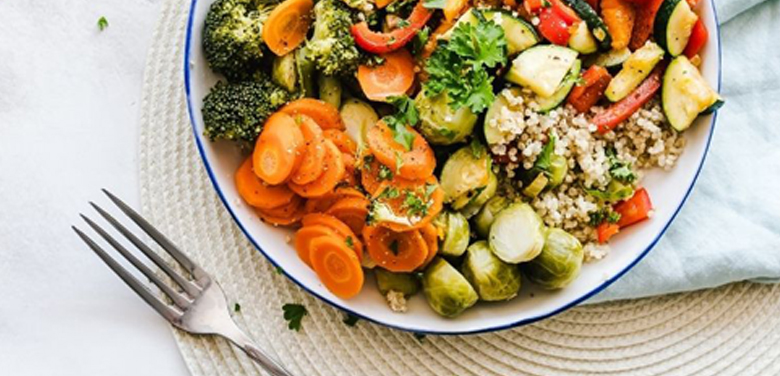
Most people are comfortable with having fruit as a snack but are less conversant when it comes to the vegetable kingdom. One of my favorite tricks is roasting vegetables—all kinds of vegetables. Whether my quarry is a tender vegetable such as zucchini or asparagus, or super-crunchy ones like rainbow carrots or winter squash, my method is roughly the same. I preheat my oven to 375 degrees, spray a shallow pan (like a cookie sheet) with a little non-stick cooking spray, cut the veggies into mouth-sized chunks, place on the pan, sprinkle your veggies with a bit of salt if desired, and position the pan in a low place in the oven. Tender veggies are done in 10 to 12 minutes. Hard vegetables take closer to 45 minutes and you’ll want to toss them around about halfway through the roasting process. Use a fork to determine doneness.
Those are my ideas for light foods that are also satisfying. If you have “go to” foods that you can have any time you feel hungry, you’ll be less likely to eat something that’s not-so-light. However, if you do, no big deal. No one ever gained weight from one snack or one meal. The effects are cumulative. So, enjoy some new “light” foods. Let us know what you liked and what you didn’t.
 Stop Losing and Win
One thought on “What Do We Mean by “Eat Lightly?””